Camouflage: A Bold Military Font for Impactful Designs
A Typeface with Built-in Character and History
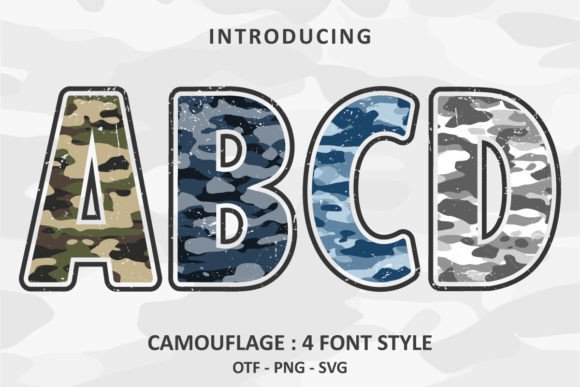
When you need a typeface that brings immediate visual weight and a distinct personality, you often find yourself scrolling through endless options. Many modern fonts feel clean but generic, lacking a strong point of view. Camouflage enters the scene as a bold military camouflage font, designed not just to display letters, but to make a statement. Its core feature is the integration of four distinctive patterns, transforming each character into a piece of retro army-style graphic art. This isn't a subtle serif font or a quiet sans serif; it's a creative font that carries texture, history, and a confident attitude directly into your work.
The visual style of Camouflage is unmistakable. The letterforms are structured with a strong, blocky foundation, ensuring they hold their shape even when filled with intricate patterns. These patterns reference classic military aesthetics, offering a sense of ruggedness, adventure, and timelessness. The included numbers follow this same design language, allowing for cohesive and original-looking headlines or branding elements. This typeface is a premium font asset for designers who want their projects to stand out with an authentic, cool, and slightly rebellious flair. It moves beyond simple typography into the realm of visual storytelling.
Practical Applications: From Branding to Personal Projects
Understanding where a font like Camouflage excels is key to using it effectively. Its strength lies in applications where capturing attention and conveying a specific theme are priorities. For logo design and brand identity, it can be a powerful choice for businesses in the apparel industry, outdoor adventure brands, sports teams, or music labels. The font's inherent texture gives logos a finished, professional look that feels deliberate and crafted. It helps a brand appear bold, confident, and memorable from the first glance.
Beyond logos, Camouflage shines in editorial design and packaging design. Think of a magazine cover for a men's style publication, a book cover for a thriller or historical fiction, or packaging for a craft beer with a vintage theme. In the digital space, it can make social media graphics and web design headers pop, especially for campaigns related to gaming, movies, or outdoor activities. For entrepreneurs and small business owners, it’s a valuable design asset for creating standout posters, event flyers, and merchandise. Even for personal projects like custom T-shirts, stickers, or digital scrapbooking using a Cricut or other cutting machine, the black version of this font offers endless creative possibilities.
Maximizing Impact: Pairing, Readability, and Licensing
Using a strong display font like Camouflage requires a thoughtful approach to ensure it enhances rather than overwhelms your project. A crucial first step is font pairing. Because Camouflage is so visually dense and textured, it pairs best with clean, simple companions. A classic sans serif font like Helvetica or a neutral serif font like Times New Roman can provide excellent contrast for body text, ensuring overall readability. Avoid pairing it with other highly decorative script fonts or handwritten fonts, as this can create visual clutter and make your design feel chaotic.
Readability is a primary consideration. Camouflage is inherently a headline and display typeface. Its detailed patterns work best at larger sizes where the character shapes and the embedded designs are clearly visible. Using it for long paragraphs of small text would likely hinder comprehension. Always test your chosen font size in context to see how the patterns render. The personality of the font—its retro, military vibe—should align with your project's message. It wouldn't suit a delicate wedding invitation, but it would be perfect for a rugged product label or a bold music poster.
Finally, consider the technical and licensing aspects. The font package includes both the full-color patterned version and a solid black version. It's vital to note that the color version's OTF and TTF files are not compatible with Cricut Design Space. For Cricut users, the black version is the tool of choice. The color version requires design software that supports advanced OpenType features, such as Adobe Photoshop, Illustrator, Silhouette Studio, or Inkscape. Always review the commercial licensing to ensure it covers your intended use, whether for client projects, merchandise, or digital products. By respecting these guidelines, you can integrate Camouflage confidently into your creative toolkit, leveraging its unique power to make your designs genuinely stand out.