Hugo: A Typeface for Grandeur and Legacy
An Embodied Sense of History and Luxury
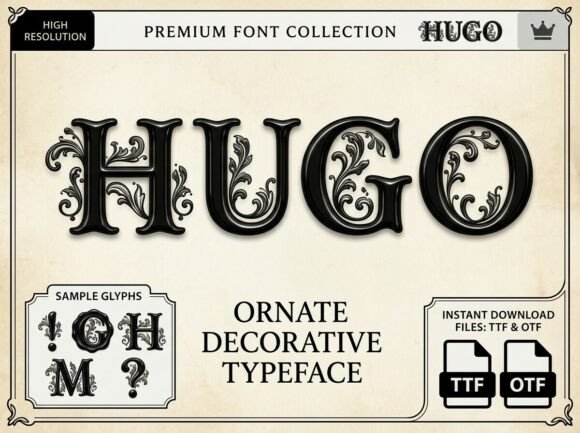
When a project calls for more than just legible text—when it demands an atmosphere, a story, a palpable sense of history—your choice of typeface becomes paramount. This is the domain of Hugo, a premium ornate decorative typeface that steps directly from an era of unparalleled craftsmanship. It’s not merely a font; it’s a design asset with a distinct soul, characterized by bold, dimensional letterforms. Each character is a miniature work of art, entwined with intricate Victorian-inspired filigree and botanical scrolls. The visual weight is undeniable, yet it’s balanced by an elegant, polished "onyx-glass" texture that suggests both durability and refined sophistication. Hugo carries a "regal-vintage" personality, making it ideal for projects where the brand identity must communicate heritage, quality, and a touch of dramatic flair.
Understanding its core appeal is key to using it effectively. Hugo is a display font, meaning its strengths shine in headlines, logos, and short bursts of impactful text rather than in body copy. Its high-resolution design ensures crisp edges and remarkable detail, whether viewed on a high-DPI screen or printed on premium paper stock. Think of it as the typographic equivalent of an ornate picture frame or a meticulously carved door—it’s meant to frame and elevate the content it surrounds. For a designer, this typeface solves the challenge of injecting instant gravitas and a narrative dimension into a layout without relying on additional illustrations or complex graphics.
Where Hugo Truly Shines: Practical Applications
The true test of a creative font is its real-world utility. Hugo’s ornate nature makes it a specialist, but within its niche, it’s incredibly versatile. Its natural habitat is in luxury branding and editorial design. Imagine it setting the masthead of a historical novel, instantly transporting the reader to another time. Consider its use on the label of a premium aged whiskey or a boutique apothecary’s tonic, where the letterforms themselves communicate the product’s artisanal quality and rich backstory. In packaging design, Hugo can be the singular element that elevates a product from ordinary to collectible.
Beyond print, its character translates powerfully into digital spaces. For social media graphics, particularly in the "gothic-romance" or vintage-luxury aesthetic, a headline set in Hugo can stop the scroll. It creates cinematic headers for websites, event invitations, and digital magazines that need a strong, thematic presence. Even in web design, it can be used strategically for hero text or key callouts, provided it’s implemented thoughtfully. For entrepreneurs and small business owners in niches like bespoke jewelry, vintage clothing, or specialty teas, Hugo offers a direct path to establishing a brand identity that feels established, trustworthy, and rich with narrative. It’s a tool for visual storytelling.
Design Intelligence: Using Hugo with Purpose
Deploying a typeface as bold as Hugo requires a strategic approach to ensure it enhances, rather than overwhelms, your project. The first principle is restraint. Because it commands so much attention, it works best when paired with something quiet and neutral. A clean, geometric sans serif font for body text or supporting information creates a necessary visual hierarchy. This contrast allows Hugo’s details to be appreciated without creating visual noise. For example, pairing it with a font like Montserrat or Lato lets the display typeface do its job as the star, while the sans serif ensures the rest of the information remains highly readable.
Evaluating project fit is crucial. Ask yourself: does the brand’s story align with themes of heritage, craftsmanship, luxury, or drama? If the answer is yes, Hugo is a strong candidate. If the project is modern, minimalist, or tech-focused, its ornate style will likely feel incongruous. Always test it in context. Mock up your logo, your book cover, or your social media header with the actual text you intend to use. Review the included styles—does it have the weight and variation you need? Check for readability at the sizes you’ll use; its intricate details are best served at larger point sizes. Finally, for any commercial project, verify the licensing. A premium font like Hugo typically comes with a license that covers specific uses, so ensuring your intended application—whether it’s for a client’s logo, a printed run of merchandise, or a website—is covered is a non-negotiable step in professional practice. It’s an investment in your project’s visual foundation, and like any good design asset, its value is realized through thoughtful application.