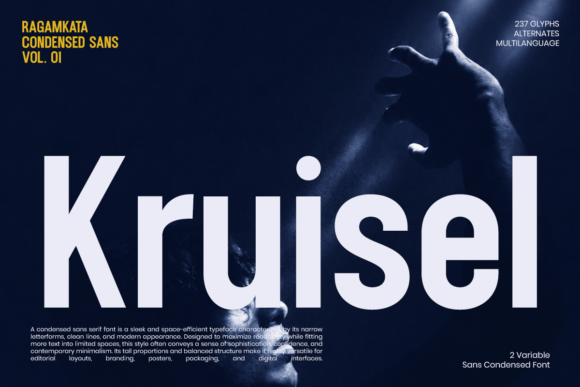
Kruisel: The Bold Condensed Sans Serif for Modern Brands
Understanding the Visual Power of Kruisel
Kruisel isn't just another typeface—it's a carefully crafted tool designed for situations where space is limited but impact cannot be compromised. As a modern condensed sans serif, it delivers tall, narrow letterforms that command attention without sprawling across your layout. The geometric construction gives each character a clean, structured appearance, while the strong vertical rhythm creates a natural sense of order and sophistication.
What makes Kruisel stand out among other condensed fonts is its exceptional readability. Many typefaces sacrifice legibility when condensed, but Kruisel maintains clarity even at smaller sizes. The balanced proportions ensure that text remains powerful and elegant whether you're designing a billboard or a business card. This combination of space efficiency and visual presence makes it a particularly useful premium font for designers working within tight constraints.
Where Kruisel Truly Shines in Real Projects
Having worked with countless typefaces over the years, I've found that certain fonts naturally gravitate toward specific applications. Kruisel excels in environments where boldness and professionalism need to coexist. Think about logo design for technology startups, fashion labels, or architectural firms—industries where a clean, modern aesthetic signals competence and forward-thinking values.
Editorial designers will appreciate how Kruisel handles magazine covers and feature spreads. Its condensed nature allows for dramatic headlines that don't overwhelm the page, leaving breathing room for imagery and body copy. For packaging design, particularly in cosmetics, spirits, or premium consumer goods, the font's sophisticated character helps products stand out on crowded shelves while communicating quality.
Digital applications present another strong use case. Web design projects benefit from Kruisel's screen-friendly construction, and its condensed proportions work beautifully for navigation elements, hero sections, and call-to-action buttons where horizontal space matters. Social media graphics also benefit enormously—when you need text that reads clearly in a small Instagram story or catches eyes while scrolling through a feed, condensed typography provides a practical solution.
- Branding and Identity: Logos, business cards, letterheads, brand guidelines
- Editorial Work: Magazine layouts, book covers, newspaper headers, annual reports
- Advertising: Posters, billboards, digital ads, email headers
- Packaging: Product labels, boxes, bags, retail displays
- Digital Interfaces: App design, website headers, dashboard elements
- Personal Projects: Invitations, presentations, personal branding materials
How Font Choice Shapes Brand Perception
Typography carries enormous psychological weight. The fonts you select for your brand identity communicate volumes before anyone reads a single word. Kruisel's personality leans toward confidence, precision, and contemporary elegance. Brands using this typeface signal that they're modern, organized, and serious about their visual presentation.
Consider how different font categories create different impressions. A script font might suggest creativity and personal touch, while a handwritten font feels approachable and casual. A traditional serif font often conveys heritage and authority. Kruisel, as a sans serif font with condensed proportions, occupies the space where modern professionalism meets bold visual statement. It says, "We're current, we're efficient, and we mean business."
This matters enormously for audience engagement. When your typography aligns with your brand's values and your audience's expectations, recognition builds naturally. People begin associating your visual language with your offerings, creating a cohesive experience across every touchpoint—from your website to your packaging to your social media graphics.
Practical Guidance for Working with Kruisel
Before committing to any commercial font, evaluate whether it genuinely fits your project. Start by examining Kruisel's included styles and alternates. Many design assets include multiple weights, stylistic variations, and special characters that expand creative possibilities. Understanding what's available helps you make informed decisions about versatility and longevity.
Font pairing deserves careful attention. Kruisel's bold, condensed nature means it pairs well with lighter, more spacious typefaces. Try combining it with a clean geometric sans serif for body text, or contrast it with a refined serif for editorial layouts. The key is creating visual hierarchy—let Kruisel handle headlines and emphasis while complementary fonts manage longer reading passages.
Readability testing remains essential. Set sample text at various sizes and view it across different contexts—printed proofs, desktop screens, mobile devices, and physical mockups where applicable. Modern typography demands flexibility, and what looks striking at 72 points might lose legibility at 14 points. Kruisel handles this range better than many condensed alternatives, but testing always reveals practical truths.
Finally, review licensing terms carefully. Whether you're a freelancer, agency, or business owner, understanding usage rights protects your investment and ensures compliance. Most reputable font licenses cover standard commercial applications, but specific terms vary between foundries. This due diligence matters whether you're selecting a display font for a single campaign or building a comprehensive type system for an entire organization.
Kruisel represents a thoughtful addition to any designer's toolkit—particularly for projects demanding visual impact within constrained spaces. Its combination of condensed efficiency and exceptional readability makes it a creative font worth serious consideration for your next branding, editorial, or digital project.