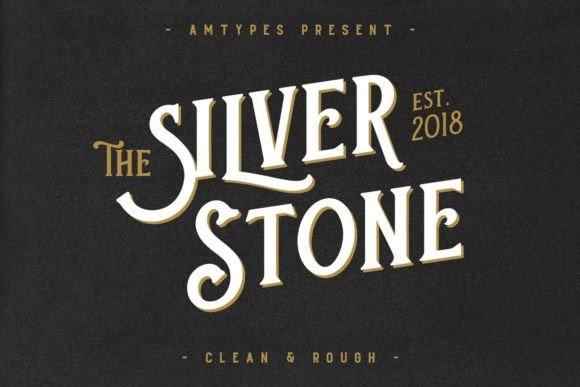
Silver Stone: A Vintage Serif for Modern Brands
The Character Behind the Curves
You know the feeling when you pick up an old book from a flea market, or spot a beautifully weathered tin on a high shelf in an antique shop. There's a certain weight to those objects—a sense of history, craftsmanship, and story. That's the exact feeling Silver Stone was designed to capture. This isn't just another serif font; it's a typeface with a distinct personality, born from a deep appreciation for the visual language of the past.
When you look at Silver Stone, you'll notice its strong, confident serifs and slightly condensed letterforms. The terminals have a subtle, elegant taper, and the overall texture feels almost like it was pressed onto paper with vintage printing equipment. It carries the gravitas of early 20th-century book titles and the approachable charm of old-world product labels. The font has a sturdy, reliable presence without feeling heavy or outdated. It’s this balance that makes it so versatile—it feels classic, but not cliché.
Where This Typeface Truly Shines
Knowing where a font like Silver Stone excels is key to using it effectively. Its inherent vintage character makes it a natural fit for projects aiming to evoke nostalgia, authenticity, and quality. Think about a craft distillery's logo, the label for a small-batch coffee brand, or the masthead for a boutique magazine. In these contexts, Silver Stone doesn't just display text; it communicates a brand's core values of tradition and care.
- Logo Design & Brand Identity: For businesses in the food and beverage, artisan goods, or heritage apparel sectors, Silver Stone can form the backbone of a compelling visual identity. It pairs beautifully with simpler sans-serif fonts for body copy, creating a clear hierarchy that feels both professional and inviting.
- Packaging Design: This is where the font truly feels at home. Imagine it on a candle box, a chocolate bar wrapper, or a premium hot sauce bottle. Its readability at medium to large sizes ensures product names and key messages stand out on a crowded shelf, while its style immediately sets a tone of quality and craftsmanship.
- Editorial & Publishing: For book covers, especially in genres like historical fiction, memoir, or literary non-fiction, Silver Stone provides instant genre recognition. It works wonderfully for chapter titles and pull quotes, adding a layer of sophistication to the page layout.
- Digital & Social Media: Don't limit it to print. A well-chosen vintage serif can make a website header or a series of social media graphics pop with character. Use it for Instagram post headlines, Pinterest pins, or YouTube thumbnails to create a consistent, recognizable aesthetic that stands apart from the sea of modern, minimalist type.
Making the Font Work for Your Project
Choosing a creative font is one thing; implementing it successfully is another. With Silver Stone, the goal is to leverage its personality without overwhelming your design. Start by considering your project's tone. If you're designing for a modern tech startup, this probably isn't the right fit. But if you're building a brand for a local bakery, a vintage-inspired clothing line, or a podcast about history, you're on the right track.
A crucial step is testing font pairings. Silver Stone's strong character pairs best with a clean, neutral sans-serif font for body text. Think of fonts like Lato, Open Sans, or Helvetica Neue. This contrast creates a dynamic visual hierarchy: Silver Stone commands attention for headlines and logos, while the sans-serif ensures long-form text remains easy to read. Avoid pairing it with other ornate script or handwritten fonts, as this can create visual clutter and reduce legibility.
Also, pay close attention to readability. As a display font, Silver Stone is most impactful at larger sizes. For very small text, like legal disclaimers or extensive product descriptions, opt for your chosen sans-serif partner. Test your designs at various sizes and on different backgrounds to ensure clarity. The goal is to evoke a feeling, not to frustrate the reader.
Practical Considerations for Designers and Business Owners
Before you commit, take a moment to evaluate the font's included styles. Does it come with the weights you need—Regular, Bold, maybe an Italic? Check the character set for the glyphs and language support your project requires. If you're working on a commercial project, always review the licensing. A premium font like Silver Stone typically comes with a license that covers specific uses, such as for a single brand or across multiple digital and print platforms. Understanding this upfront protects you legally and ensures you're using the design asset correctly.
Think about brand consistency. If you adopt Silver Stone as part of your brand identity, document its usage. Specify which styles to use for headlines, subheads, and logos. Define its pairings. This turns a beautiful typeface into a reliable tool for maintaining a professional and recognizable brand image across all touchpoints, from your website to your business cards.
A Final Thought on Authenticity
In a digital world saturated with sleek, geometric fonts, a typeface like Silver Stone offers a breath of fresh air. It provides a tangible connection to craftsmanship and history, which can be a powerful differentiator for your brand or project. It’s not about being old-fashioned; it’s about being intentional. It’s about choosing a tool that doesn’t just convey information, but also tells a story. When used thoughtfully, Silver Stone can help you build a visual narrative that resonates deeply with your audience, turning casual viewers into loyal advocates who appreciate the quality and care you put into every detail.