Chalkboard: A Simple, Balanced Font for Modern Design
More Than Just a Name: The Personality of a Well-Balanced Typeface
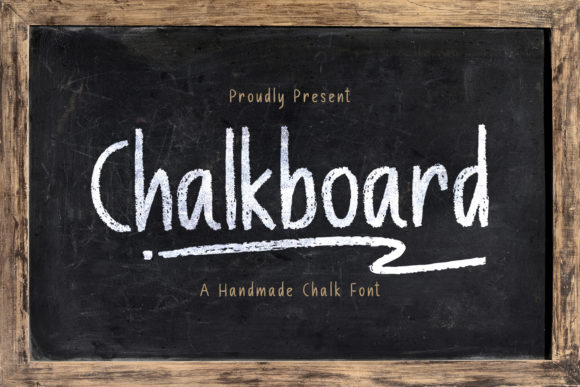
At first glance, you might expect a font called Chalkboard to be rough, uneven, and overly casual—something that looks like it was scribbled during a brainstorming session. But this particular typeface subverts those expectations. It is a display font that bridges the gap between playful handwritten aesthetics and professional stability. The defining characteristic of Chalkboard is its incredible balance. It manages to feel organic and personal without sacrificing the structure needed for clear communication.
The letterforms are constructed with a consistent weight and even spacing that you rarely find in traditional handwritten fonts. Where most script styles suffer from chaotic baselines or illegible loops, Chalkboard offers a simplified, geometric approach to the handwritten style. It captures the essence of a marker or chalk stroke—friendly and approachable—while maintaining the structural integrity of a sans serif font. This makes it a unique asset in the world of modern typography. It feels familiar, yet it is distinct enough to stand out in a crowded marketplace. If you are looking for a creative font that doesn't look like a novelty item, this is a strong contender.
Practical Applications: Where Chalkboard Shines
Understanding a typeface is one thing; knowing where to deploy it is where the strategy comes in. Because Chalkboard is a display font, its primary job is to grab attention. It is not designed for long-form body copy, like the text of a novel or a dense report. However, for headlines, sub-headers, and call-to-action statements, it is incredibly effective.
Branding and Logo Design
For entrepreneurs and small business owners, a logo needs to be memorable and convey a specific mood instantly. Chalkboard excels in logo design for brands that want to appear approachable and human. Think of local bakeries, boutique consulting firms, lifestyle coaching brands, or eco-friendly products. The font suggests a brand identity that is transparent and honest. It avoids the coldness that sometimes comes with corporate sans serif fonts, yet it remains professional enough to be taken seriously.
Digital and Web Design
In the realm of web design, readability on screens is paramount. Chalkboard’s open letterforms and distinct characters make it a great choice for website headers and feature images. It adds a layer of warmth to digital interfaces that can often feel sterile. When used in social media graphics, the font performs exceptionally well. It mimics the aesthetic of hand-drawn content, which tends to stop the scroll. Whether you are creating Instagram stories, Pinterest pins, or YouTube thumbnails, this premium font provides a polished look that free alternatives often lack.
Print, Packaging, and Editorial
When it comes to packaging design, the font’s versatility is a major asset. It works beautifully on coffee cups, craft labels, and stationery. In editorial design, such as magazine covers or book titles, Chalkboard can inject energy into a layout. It pairs well with photography, sitting comfortably over images without obscuring the subject. For publishing, particularly in the children’s or young adult genres, the font offers a youthful vibe that is engaging but not childish.
Design Mechanics: Influence on Hierarchy and Perception
Choosing a font is a psychological decision as much as an aesthetic one. The visual weight and style of your typography directly influence how your audience perceives your brand. Chalkboard influences the viewer by lowering the barrier to entry. It signals, "We are easy to talk to." This is vital for brand identity in sectors like health, wellness, and creative services.
However, effective use requires an understanding of visual hierarchy. Because Chalkboard is a display style, it has a strong personality. If you use it for everything, you risk visual fatigue. The best approach is to use it for the "shout"—the headlines and key messages—while pairing it with a cleaner, neutral typeface for the details. This contrast creates a dynamic layout. The creative font draws the eye in, and the supporting text delivers the information efficiently. This interplay is essential for maintaining readability and guiding the reader's eye through the content naturally.
Technical Strategy: Pairing, Licensing, and Selection
To get the most out of this asset, you need to think about compatibility. Font pairing is an art, but with Chalkboard, the rules are simple: contrast is key. Because it has a handmade, textured feel, it pairs best with clean, geometric sans serif fonts or simple serif fonts. Avoid pairing it with other decorative styles like script fonts, as the visual noise will be overwhelming.
For example, using a clean, modern sans serif for your body text and Chalkboard for your headers creates a look that is both professional and personable. This combination works across nearly all mediums, from digital presentations to printed brochures.
When selecting this font for a project, consider the included styles. Many premium font packages include alternates or ligatures that can help customize the look further, ensuring your design feels unique. Always check the commercial font license to ensure it covers your specific usage, whether that is for physical products, merchandise, or digital advertising.
Final Verdict: A Versatile Design Asset
Ultimately, Chalkboard is a design asset that earns its place in a designer’s toolkit through sheer utility. It solves the common problem of needing a font that feels "human" without looking messy. Whether you are a crafter making decals, a marketer building a campaign, or a blogger designing a header, this typeface offers a reliable, stylish solution. It proves that you don't need complexity to create spectacular designs; sometimes, you just need the right balance.