Chicago: The Bold Retro Script for Modern Design
There’s a certain warmth to retro design that feels both nostalgic and surprisingly fresh. It’s not just about looking backward; it’s about borrowing the confidence and character of past eras to make something that stands out today. The Chicago typeface captures this perfectly. It’s a bold, retro script that doesn’t whisper—it speaks with a clear, stylish voice. If you’re looking to inject some genuine personality into your next project, this is a font worth knowing.
More Than Just a Pretty Script
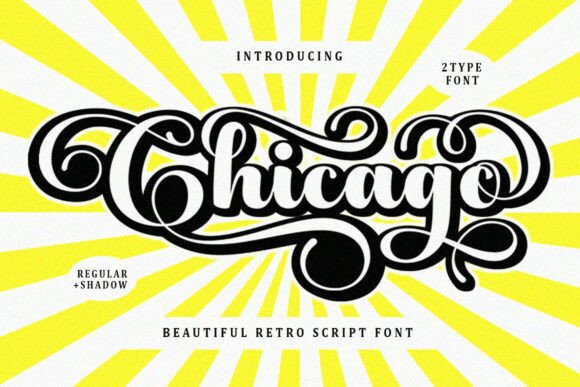
At its heart, Chicago is a script font with a mid-century soul. The letterforms have a fluid, connected baseline that gives it a handwritten quality, but the weight and structure are anything but casual. This isn’t a delicate, flowing calligraphy script. It’s a display font built for impact. The strokes are thick and confident, with a slight bounce that adds energy without sacrificing legibility.
What truly sets Chicago apart is its extrude version. This isn’t just a shadow or an outline effect added in software; it’s a carefully crafted style integrated into the font file itself. The extrude gives the letters a tangible, three-dimensional quality, instantly evoking vintage signage, classic packaging, and old-school show titles. It’s a shortcut to that authentic retro effect font look, saving you hours of manual work in Illustrator or Photoshop.
Where Chicago Truly Shines
Think of Chicago as your go-to for projects that need a strong, memorable identity. Its personality is best suited for applications where you want to make an immediate visual statement.
- Logo Design & Brand Identity: This is where Chicago excels. A logo set in this typeface feels established and full of character. It’s perfect for brands in the food and beverage space (think craft breweries, artisan bakeries, or retro diners), boutique retail, barbershops, or any business that wants to project a friendly, confident, and slightly nostalgic vibe. It helps build a brand identity that feels both timeless and distinctive.
- Editorial & Packaging Design: Use it for magazine headlines, book covers, or chapter titles to grab attention instantly. On packaging, Chicago can make a product jump off the shelf. It’s fantastic for labels on bottles, gourmet food packaging, or cosmetic branding where a touch of vintage glamour is desired.
- Print & Stationery: Wedding invitations, greeting cards, and event posters gain a layer of sophistication and fun. The font’s personality can set the entire tone for an event, from a classy gala to a vibrant birthday celebration.
- Digital & Social Media: While primarily a display face, Chicago can be incredibly effective in digital spaces. Use it for website hero sections, social media graphics, YouTube thumbnails, or podcast artwork. It ensures your key message is seen and remembered in a crowded feed.
The Practical Side of Choosing a Premium Font
Adopting a typeface like Chicago is about more than just its look. It’s about understanding how it works within your broader design assets. Here’s how to think about integrating it effectively.
Evaluating Fit and Readability: First, be honest about your project’s needs. Chicago is a creative font for headlines and short bursts of text, not for long paragraphs. Its strength is in high-impact, low-word-count applications. Always test it at the size you intend to use. The extrude version, for instance, might need to be slightly larger to maintain clarity, especially in digital formats.
Mastering Font Pairing: This is critical. A bold script like Chicago needs a counterpart that supports it without competing. The best practice is to pair it with a clean, neutral sans serif font or a simple, readable serif font. For example, use Chicago for a product name on packaging, then pair it with a sans serif like Helvetica or Futura for the descriptive text. This creates a clear visual hierarchy, letting the retro script do its job as the star while the supporting font handles the details.
Understanding the Styles: A good premium font often comes with more than one style. With Chicago, you’re not just getting the standard script. You’re likely getting the extruded version, and possibly alternates or ligatures that offer subtle variations. Explore these. The alternate swashes can add a custom feel to a logo or invitation, making your design unique.
Licensing for Your Needs: If you’re a small business owner, blogger, or entrepreneur, pay close attention to the license. A commercial font license is necessary if you’re using it in any project that generates revenue, whether it’s a client’s logo, your own product packaging, or monetized content. Ensure the license covers your intended use—desktop, web, app, or social media—to avoid legal headaches down the line.
In the end, choosing a typeface is a strategic decision. Chicago offers a powerful combination of nostalgic charm and modern boldness. It’s a tool for designers and creators who want to add instant personality and a touch of retro flair. When used thoughtfully—paired well, applied in the right context, and licensed correctly—it can become a cornerstone of a compelling visual identity that truly connects with an audience. It’s not just a font; it’s a statement.