Joylight: The Retro-Futuristic Typeface for Bold Brands
If you've ever wanted to capture the electric buzz of a neon sign or the hypnotic pulse of an old-school synthesizer in your design work, you know how hard it can be to find a typeface that truly gets it. Most display fonts either lean too far into nostalgia and feel dated, or they try too hard to be futuristic and lose their soul. Then you find something like Joylight, and it clicks. This isn't just a collection of letters; it's a vibe, a frequency. It's the visual equivalent of driving through a rain-slicked city at night with the glow of billboards reflecting off the asphalt.
Decoding the Neon Grid: What Makes Joylight Unique
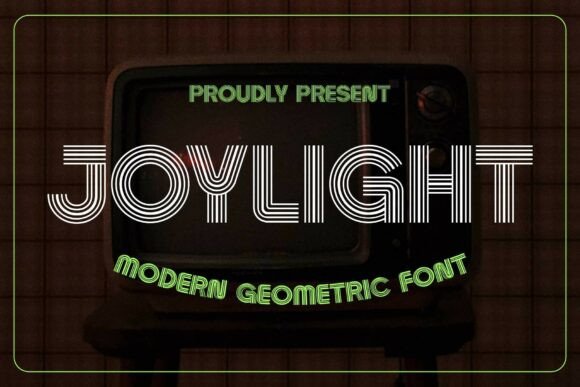
At its core, Joylight is a premium display font built on a foundation of heavy, geometric block letters. But look closer, and you'll see its defining feature: concentric parallel tracking lines etched into each glyph. These aren't mere outlines; they're structural ridges that create a mesmerizing, maze-like effect. The result is a dual personality. Zoom in, and you see the intricate, almost technical linework of a circuit board or a vintage broadcast test pattern. Step back, and the forms coalesce into a solid, powerful shape that commands attention, emitting a sense of kinetic energy and light.
This style bridges decades. It taps directly into the heart of 1980s synthwave and retrowave aesthetics—the era of Tron, early arcade cabinets, and VHS tape art—while feeling completely at home in modern digital club branding and cyberpunk-inspired media. The font's "neon-glow" effect isn't just decorative; it suggests illumination, making it perfect for projects that need to convey energy, nightlife, technology, or a slightly edgy, alternative vibe. It's a creative font that does more than spell words; it sets a scene.
Where Joylight Truly Shines: Practical Applications
Knowing a font looks cool is one thing. Knowing where to use it effectively is where real design value lies. Joylight isn't your body copy font. Trying to read a long paragraph set in its dense, lined forms would be a chore. Its power lies in short, high-impact bursts. Think of it as the headline act, not the supporting player.
For logo design and brand identity, Joylight is a standout choice for specific niches. Imagine it forming the wordmark for:
- An independent electronic music label or a DJ's personal brand.
- A boutique arcade bar, a retro-themed cocktail lounge, or a VR gaming center.
- A podcast dedicated to 80s culture, synth music, or tech reviews.
- A clothing line that blends streetwear with sci-fi and retro aesthetics.
In these contexts, the font doesn't just label the business; it communicates its entire ethos instantly. It tells your audience, "This is a place for you," before they've read a single line of description.
Beyond logos, its applications in marketing and digital content are vast. Use it for:
- Social media graphics: Create thumb-stopping titles for YouTube videos, Instagram posts, or event announcements. Its visual density ensures it stands out in a crowded feed.
- Album and single artwork: It's practically made for this. The rhythmic linework mirrors sound waves and synthesizer grids.
- Event posters and flyers: For club nights, music festivals, or comic conventions, Joylight sets the tone immediately.
- Web design headers: Use it for a hero section on a site for a tech startup, a music blog, or a gaming news outlet to establish a bold first impression.
Integrating Joylight into Your Design Workflow
Adopting a new display typeface requires more than just liking its look. You need to evaluate its practical fit for your project. Here’s a straightforward way to approach Joylight.
Test for Context and Hierarchy: Always mock it up in the context of your actual project. Place a headline set in Joylight against your chosen background color or imagery. Does it compete with your main visual, or complement it? Its heavy presence means it can easily dominate a layout. Use it for your primary headline or a key logo element, and pair it with a clean, simple sans serif font for subheadings or body text. A font like Inter, Roboto, or even a classic like Helvetica provides a calm, readable counterpoint to Joylight's energetic complexity.
Evaluate the Included Styles: Most quality font families come with more than one style. Check if Joylight includes alternates, stylistic sets, or a version with a different line weight or fill. These variations are invaluable. A solid fill version might be better for small-scale applications like social media icons, while the full lined version is perfect for large-format posters. Understanding your toolkit prevents you from feeling limited.
Consider Readability Carefully: This is paramount. As a creative font with intricate detailing, Joylight's legibility diminishes rapidly as size decreases. Never use it for fine print, legal disclaimers, or lengthy descriptions. Test it at the intended output size. If you're designing for mobile, check how it renders on a small screen. Its strength is recognition and impact, not nuanced readability in paragraphs.
Understand Commercial Licensing: For any professional project, especially those involving packaging design, merchandise, or client work, ensure you have the correct commercial license. This is a non-negotiable step. Using a premium font like Joylight correctly protects you legally and supports the type designers who create these tools.
Ultimately, Joylight is a specialized tool in a designer's arsenal. It's not for every project, and that's its strength. When your brief calls for energy, retro-futurism, and a bold, unapologetic presence, it delivers a unique frequency that's hard to replicate. It helps transform a generic layout into a branded experience, making it a valuable design asset for creators who work at the intersection of technology, music, and night-life culture. Used thoughtfully, it does more than decorate—it communicates a powerful, specific identity.